Showing posts with label featured. Show all posts

Sunday, August 10, 2014

Monkey selfie! Does the monkey own the copyright to it? An Indian perspective…

David Slater, a British wildlife photographer visited a park in Indonesia in 2011. At the park, a crested black macaque got its hands on one of his cameras and took several selfies, including the one accompanying this blogpost. Slater is reported to have said said “They were quite mischievous jumping all over my equipment, and it looked like they were already posing for the camera when one hit the button, … The sound got his attention and he kept pressing it. At first it scared the rest of them away but they soon came back - it was amazing to watch.”

The selfie accompanying this post has become a point of dispute between the Wikimedia Foundation and David Slater since Wikimedia refused to take the image down and has deemed it to be in public domain by displaying the following notice -

“This file is in the public domain because as the work of a non-human animal, it has no human author in whom copyright is vested.”

Contrary to what some news outlets have tried to suggest, even the Wikimedia foundation never really suggested that the copyright belongs to the monkey legally. That was just bad reporting and clickbait headlines on part of Times of India.

Indian Position

I am not very well read on Copyright Law but a cursory reading of the Indian law on the subject i.e. Copyright Act, 1957 seems to suggest that Wikimedia would be right even if all the events had taken place here.

Section 2(d)(iv) read with section 17 makes it clear that the person clicking a photograph is its author and the owner of the copyright so long as the photograph is not clicked as another person’s employee or upon being commissioned by another to click it. The relevant sections are as follows (underline added for emphasis) --

2. (d)(iv) “Author” means -- in relation to a photograph, the person taking the photograph;

17. First owner of copyright.-Subject to the provisions of this Act, the author of a work shall be the first owner of the copyright therein.
Provided that-
(a) in the case of a literary, dramatic or artistic work made by the author in the course of his employment by the proprietor of a newspaper, magazine or similar periodical under a contract of service or apprenticeship, for the purpose of publication in a newspaper, magazine or similar periodical, the said proprietor shall, in the absence of any agreement to the contrary, be the first owner of the copyright in the work in so far as the copyright relates to the publication of the work in any newspaper, magazine or similar periodical, or to the reproduction of the work for the purpose of its being so published, but in all other respects the author shall be the first owner of the copyright in the work;
(b) subject to the provisions of clause (a), in the case of a photograph taken, or a painting or portrait drawn, or an engraving or a cinematograph film made,
for valuable consideration at the instance of
any person, such person shall, in the absence of any agreement to the contrary, be the first owner of the copyright therein.


Since, by no means can it be proved that the monkey was an employee or a person acting for valuable consideration, it is quite clear that under the Indian law as well, Mr. Slater would not be the owner of the copyright despite the camera being his. Thus the wikimedia stance seems sound even when tested on Indian Copyright law.


Does the copyright belong to the Monkey? Is it a ‘Person’?

Now that we established that the copyright will not belong to Mr. Slater, the obvious question that next arises is whether or not the Monkey shall then be the owner of the copyright. As per sections 2 and 17 the would be the author of the photo and the first owner of the copyright, but only if it can be established that the monkey is a ‘person’. Since the word person is not defined under Copyright Act, 1957 we shall have to look into the General Clauses Act, 1897. It states -

"Person" shall include any company or association or body of individuals, whether incorporated or not…

While a simple reading of this would suggest that a Monkey is not defined to be a person, it could be argued that the definition, the way in which is worded only clarifies that in addition to the usual or other meanings conveyed by the word ‘person’, it would also include companies, association of persons etc. The definition does not bar a monkey from being defined as a person at all, though for all practical purposes I think no court would be ready to entertain a claim that ‘person’ includes Monkey.


Can Monkeys be non-human persons?

Though I say it is unlikely to succeed, I would love to see someone try argue that monkeys are ‘persons’ and  capable of owning copyright. I think one would almost certainly have to rely on a policy statement from Ministry of Environment and Forests which suggests that animals such as Dolphins may have rights. The statement was issued when the government banned dolphins from circuses or marine park shows. While by no means does a mere statement have the force or weight of law, it could be argued that both dolphins as well as apes or monkeys should be termed as ‘intelligent nonhuman persons’ having some rights though not all.

The ministry is reported to have stated -

Whereas cetaceans in general are highly intelligent and sensitive, and various scientists who have researched dolphin behaviour have suggested that the unusually high intelligence; as compared to other animals means that dolphins should be seen as ‘non-human persons’ and as such should have their own specific rights and is morally unacceptable to keep them captive for entertainment purpose,” the ministry said. <Link><Link>


State as a guardian?

If monkeys or other animals could actually be proved to be ‘persons’ eligible of owning copyright, the next question that would arise would be how would they enforce it in courts or what would they do with their revenue gained through licensing if any. One possible model that could infact work would be with the entire animal kingdom considered to be one large association of non human persons with all the copyrights of selfie clicking animals accruing to it. The state could then be the guardian of this entity and incharge of licensing the images. The funds raised through licensing could be collected in a special fund on animal welfare… The existence of such a model could also possibly extend its own scope to include animal sound recordings apart from selfies!

Note: The copyright of the image used on this page either belongs to Mr. Slater or the monkey or the image is in public domain. It certainly doesn’t belong to me. I believe my usage of the image is permitted under section 52 of the Copyright Act, 1957 as fair dealing for the reporting of current events.


That is all from my end. What do you think about the monkey selfie?

Do you think Mr. Slater owns the copyright or the monkey?

Or do you think differently and believe that the rights of humans who take selfies should be stripped of their human rights?

Do comment below and let me know!

Thursday, July 24, 2014

Book Review – ‘The Silkworm’ by Robert Galbraith (JK Rowling)

Hard to remember these days that there was a time you had to wait for the ink and paper reviews to see your work excoriated. With the invention of the internet, any subliterate cretin can be Michiko Kakutani.

-- Robert Galbraith, The Silkworm.

Cormoran Strikes Again!

Despite her pseudonym cover having been blown after her very first novel as Robert Galbraith, JK Rowling has returned as Robert Galbraith with another amazing whodunit, The Silkworm. It is the second novel (in what is now rumoured to be a seven novel series like Harry Potter) featuring the private investigator duo of Cormoran Strike and his assistant Robin Ellacott who first appeared in The Cuckoo’s Calling published in April 2013. The Silkworm has unfortunately received slightly less press and publicity than The Cuckoo’s Calling partly because of the surprise of the pseudonym having worn off and partly because the book’s sales and publicity have been hampered by the ongoing Amazon-Hachette dispute.

the_silkworm__spanThe novel opens with Strike unexpectedly entertaining Leonora Quine’s request to help look for her husband, the arrogant and eccentric author Owen Quine who is missing for several days and later turns up dead, turning it into a murder mystery. We slowly learn how the death has occured closely on the heels of the leak of his latest manuscript, Bombyx Mori which is a revengeful masterpiece. Bombyx Mori (Latin for The Silkworm) is a book full of thinly veiled references to almost all the people in his life, portraying his lovers, agent, publishers and editor is an extremely negative light. This book which has potential to libel almost everyone in Quine’s world thus opens up an extremely wide field of suspects who have a motive for murdering Quine. We are presented with a cast of several memorable characters, all complete with their own interesting idiosyncrasies. With most of the characters in the novel shown to be associated in one way or the other with the publishing industry, it is impossible to not wonder if Rowling has based some of them on persons she herself has dealt with in the publishing world.

While, Cormoran Strike the one-legged, gruff former military police (also son of a famous rockstar) who is described as a 6-feet 3-inches tall Cornish bloke with boxer's broad nose and thick, surly brows was already introduced in The Cuckoo’s Calling, in The Silkworm we learn more about his friends and family, many of whom he has to call upon to ease his way with the investigation. We also see him continuing to deal with the agony of having finally ended the matters with his extraordinarily beautiful, high society fiancé with whom he has been in a relationship off and on for sixteen long years. Showing the continuity from the previous book we also see him having to deal with the consequences of his unexpected fame following his success in unravelling the mystery of a super model’s death in the previous novel.

Strike continues to be aided by his assistant Robin, a pretty girl, tall and curvaceous, with long strawberry-blonde hair. In The Silkworm, now being a regular employee rather than a temp, Robin’s struggle between her relationship and work comes to the fore. Throughout the tale she has to work around the issue of both the important men in her life being dismissive of her career aspirations. Rowling has continued to use Robin to subtly highlight the problems faced by the working women while at the same time she also tantalises us with some moments of sexual tension between the two leads. Robin’s issues with her largely unsupportive fiancé and Strike’s misery over his ex-fiancé leaves the reader pining for a romantic angle between the two leads.

Strike’s approach to investigation is disciplined and consists of interviews with the suspects coupled with collection of clues and logical deductions. When the long series of interviews slowly begins to feel repetitive, we come across several red herrings strategically embedded in the narrative, to keep the reader guessing. The narrative moves much slower than many other popular crime novels or mysteries but the deft plotting ensures that the reader keeps flipping the pages. At 453 pages the novel does seem a tad bit too long for the limited story that it encompasses and might have felt better had it been slightly faster paced. The ending is beautifully crafted with a clever twist in the tale that I did not manage to anticipate. Only after reading the end do you see the clues scattered strategically through the narrative. However, Rowling reveals that the protagonists have cracked the mystery while the reader has to follow them through almost another 75 pages to discover how they deduced the identity of the killer. I find this style very annoying but with web of clues and leads unfolding, it is impossible not to continue reading.

Writing as Robert Galbraith, Rowling sheds her sanitized language of the Harry Potter series and the characters use expletives rather liberally. She has also not held back on any of the gory details and descriptions of death, making the scene where the dead body is discovered especially gut wrenching. Characters’ dialogue is also peppered with her views on various matters of contemporary interest. Strike and his lawyer friend mention the phone hacking scandal and the status of legal aid respectively while many of the other characters also reflect on the publishing industry. Some of the more memorable lines are -

“If you want a lifetime of temporary alliances with peers who will glory in your every failure, write novels.”

 “You can’t plot murder like a novel. There are always loose ends in real life.”

“Like most writers, I tend to find out what I feel on a subject by writing about it. It is how we interpret the world, how we make sense of it.”

“Fancourt can't write women,' said Nina dismissively. 'He tries but he can't do it. His women are all temper, tits and tampons.”

Though the book is slower than most novels that I love to read, it is an absolute joy and pleasure to read The Silkworm. Rowling is a master of character development and at the end I not only felt like I knew rhr protagonists for ages but also remembered the quirky details of all the minor characters whom she has so expertly fleshed out. Rowling's amazingly detailed descriptions coupled with her deft plotting which keeps you curious throughout ensured that the book was unputdownable.

All in all, it was a great read and I cannot wait to read about Strike and Robin's next case!

Rating : 8/10

You can buy The Silkworm & The Cuckoo's Calling for a discounted price at Flipkart!

Disclosure : I was supplied with a review copy by Hachette India.


Monday, July 1, 2013

Transparency lesson from the past!

Interning at an office in South Bombay has meant that I found time to and had to go to several colonial buildings including the Bombay High Court, the Esplanade Centre of Magistrates’ Courts, the Central Telegraph Office and the Victoria Terminus (now – CST).

I noticed a common feature in these beautiful public buildings built in the late 1800s or early 1900s. To ensure transparency, these buildings carry a great many details on their prominently displayed plaques. These plaques have details of not only when was the building sanctioned and who built it but also about the chief designers, engineers and most importantly the difference between the estimated and final costs of the project.

Take a look at this plaque at the Central Telegraph Office*.

image

* – The image says General Post Office because it was built as the GPO but later on  when the present GPO building was built it was made the Central Telegraph Office.

The very detailed plaque above shows that the massive building was completed in just about three years from 1869 to 1872 and that the actual cost of ₨. 5,94,200 was actually about five thousand rupees lesser than the sanctioned cost of ₨. 5,99,992.

This plaque is infact a tool of accountability and transparency. The name of the architect along with the names of those who were incharge of the construction is out there literally etched in stone for everyone to see. 

Another example of such a plaque is the image below (taken from http://www.greatmirror.com) which I believe is of the building presently housing the Maharashtra Archives.


Let’s bring back this practice…

This practice of elaborate plaques has been almost completely abandoned today. I don’t remember seeing any post-independence building or structure of which so many details including the name of the architect and the cost of construction is available on the structure itself. While plaques still exist they tend to only highlight the names of the so called VIPs who inaugurated it.

With several infrastructure projects and public buildings in Bombay (and other parts of India as well) being way behind schedule and extremely over budget, this could be an effective way to put pressure on contractors to finish on time an within budget because if the don’t, their shortcomings would be on display for the world to see, for ages to come. It is also a transparency mechanism since when the people see how many taxpayers’ rupees were spent on a particular building or project they would be able to gauge for themselves if it was money well spent.

In our hurry to move forward and progress, it is not really wise to leave behind the wisdom of the past!

Do comment and let me know if you have ever seen in Bombay,a modern building plaque that states anything apart from the name of the VIP or VVIP who inaugurated it!


Saturday, November 26, 2011

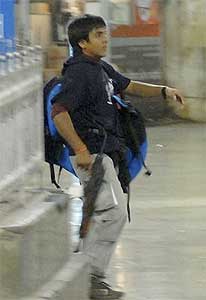
Following due process with Kasab is in your own interest!


Ajmal Kasab
Image from Wikipedia 
"Why is he still alive?"
"16 crores? Give me 16 crores instead of him"
"We have no security but he has the best security in the country"
"It has been THREE YEARS!! Justice delayed is justice denied"
Now that the third anniversary of the horrendous 26/11 attacks has dawned, many of today's conversations, be it at the watercooler, while hanging in a Bombay local, while drinking chai or in a classroom, will have the sentences mentioned above. Almost everyone shall vent out their frustration about their tax rupees (those which they absolutely had to pay after exhausting 9999 methods of avoiding tax) being used keep Kasab alive and secure, three years after he was caught. In such cases, the legal community should be pointing out how following the due process of law is the righteous way of doing justice (as opposed to Guantanamo Bay). Sadly however, many within the legal community shall be baying for Kasab's blood too. Here is my little attempt to counter the situation in order to show why following the due process of law with Kasab is in the common man's own interest.

The possibility of police complacency
If the principle is laid down that in terrorism cases such as Kasab's, the trial shall be a summary trial with relaxed rules of evidence and no appeal, the police might get complacent. Here is how - If a terrorist attack takes place again, the police will be under enormous pressure to make some arrests. In order to show that they weren't caught with their pants down, the police maybe very tempted to randomly arrest some poor guy and claim they caught a terrorist. With a summary trial, this shall become really easy and therefore tempting. Even when there is scope for thorough investigation the police maybe tempted to just make someone a scape goat if they know that they wont have to prove anything beyond a reasonable doubt.

All other Indians apart from those who were the victims have only seen Kasab on TV. They are convinced of his guilt merely because all news stories about him tally. If there were to be no thorough trials for the terrorism accused, he police would just need a good PR team to tell the country that any guy they catch is the real terrorist and their job would be done.  WHAT IF THAT SCAPEGOAT IS YOU?

Present : You say - Who cares if Kasab gets a fair trial? He is guilty as hell!
Future : Will you say - I dont want a trial even though I have been falsely implicated?

Even today there are alleged cases of shoddy investigation in terror related cases (and many more in naxal related cases). I am not saying that all police will definitely turn complacent but why create the possibility?

The progress isn't really slow
The special court proceedings are over and Kasab has been sentenced to death. His appeal has been turned down by the Bombay High Court. The matter is now before the SC. The pace with which the case is moving is not actually slow by Indian standards. Indira Gandhi's assassin was also hung only after about five years.

The Money
Well, 16 crores might be a big deal for you and me but it is not for the Union of India or the State of Maharashtra. It is a miniscule part of the budget. The government spends far far more on just paying interests on its loans to foreign banks which is also a head of spending where your tax ruppees go without benefiting you. The money is not being handed over to him. It is being spent on housing him, feeding him and for his security. You may say even one rupee is too many, but then it is the cost of doing justice. Just be secure in the knowledge that if you or I are ever undertrials, the state will still feed us and try to keep us secure as far as possible too.

In conclusion, the due process is being followed and justice shall be done. There is no point in hollering for Kasab to be hung instantly. When due process is followed with him, it prevents complacency and is thus in our own interest. Furthermore, we can show the world that even terrorism can be dealt with in a humane and a fair manner without resorting to unconstitutional prisons and murders.

***
This post was first posted on Legally India website

Sunday, March 13, 2011

English is an Indian Language!

New York Times recently published a letter titled  “India Faces a Linguistic Truth: English Spoken Here” which succinctly makes the case for how English is the de-facto national language of India. I couldn’t agree more. All around India you can see signs of how English is omnipresent in every walk of life and only politicians and extremist activists portray English as an undesirable colonial imposition on the people of India.

The much lauded 9% growth rate of India is driven mostly by growth in knowledge intensive sectors like IT and the services sector in which knowledge of English is the most basic prerequisite. Even in small towns and villages, there is much demand for English language education and English medium schools as well as private English tuition centres are raking in huge amounts of money.  English is the route to every aspiration that the common man of India.

English is as Indian as Mehendi, Cricket or Tea

The most common and often the only argument against usage of English is that it is a “foreign” language. But how do you define what is ‘Indian’? The tradition of applying mehendi or heena, seen at almost every Indian wedding (both Hindu & Muslim) was brought to India by Persian invaders. Cricket, also a British import, is now an integral part of contemporary Indian culture. It is played, watched and discussed in the smallest of the Indian villages. Any suggestion of Cricket being an undesirable foreign import would sound absurd to any average Indian who has grown up watching and playing it. Tea, the afternoon drink of choice for most office workers in India is always served the British way, with milk and sugar but hardly any one on protests this British influence in Indian lifestyle.

The last but most telling sign of English being as much an Indian language as any other is that most Indians liberally use several English words while speaking their own mother tongues even when local alternatives exist. For example while discussing cricket in Hindi, most people (including the ones who have never learnt English) will still use the words ‘batsman’, ‘bowler’ and ‘boundary’ instead of the Hindi words बल्लेबाज़, गेंदबाज़ and चौका. As far as I know, there are no widely used Hindi/Marathi synonyms at all for words like ‘table’, ‘railway’ and ‘camera’. The practise of using English words for modern tools is specific to India because we feel comfortable with using English. Other languages like Chinese and Korean have developed local words for these modern inventions.

Culture evolves

So, I think that the criticism that English is a foreign and alien language is completely unfounded and wrong. Something that has been a part of Indian culture for atleast a hundred and fifty years cannot be called an alien language. Today, English has has assimilated into our culture to become a part of it just the same way that mehendi did over the years. So English belongs to India as much as it does to Britain, America or Australia.

While whether English should be adopted as the only official language and/or the national language is another different debate altogether, I hope politicians accept the reality and instead of promoting regionalist pride, take steps to use to use and enhance India’s advantage of being comfortable with English. While Indian government schools continue to educate only in unmarketable local languages, surprisingly enough, our neighbour has realised the advantage of English and is leading the way!

Article from Pakistani newspaper - http://bit.ly/pakenglish

Image source : Amazon.co.uk - Front Cover of the book, Indian English Language and Culture (Lonely Planet Language Reference)

Monday, February 7, 2011

The boy who cried wolf – 21st century version

I am sure that you remtories as a child and imagining yourself as the characters in them. Well, you should take note that you are very likely a character in story that is unfolding right now! This is because “Forward First, Think Later” culture of today’s internet users is going to land us right into the age old story of the shepherd boy who used to shout out “wolf” just to see other villagers come running hastily for no reason. In case you do not remember, the villagers who wisened up to his tactics soon stopped trying to help him when he shouted. Finally, on the day that a wolf really attacked his herd, nobody came to help him and all his sheep (and in gorier versions, the shepherd too) was slaughtered by the wolf.

“Forward First, Think Later”
The number of email hoaxes and chain mails is incredibly large but more shocking is how successfully they circulate despite the fact that many of them are blatantly fake. This success can be attributed to the attitude of the people who do not even bother to take five seconds to verify what they are forwarding. Amongst such ridiculous chain mails was a one urging people to forward to their friends an email warning about the dangers of “dihydrogen monoxide” which if you take a second to think about is just water! Equally ridiculous are the emails that claim hotmail/gmail/yahoo/facebook will close inactive accounts due to their financial difficulties if an email is not forwarded. Ironically, I once received such a message on facebook while I was reading a story about Facebook’s expansion plans and investment bank GoldmanSachs’ investments in Facebook.

“The ‘WOLF!’ effect”
More worrying than the chain mails is the attitude shift that they lead to. Most if not all of such chain mails have subject lines with words like -‘warning’, ‘important’, ‘do not ignore’, ‘read at once’, ‘urgent help required’. As most of such emails turn out to be hoaxes or chain mails, I tend to read mails with such subject lines last and that too only if I have time. To complicate the matter further many of my close friends and relatives i.e. the people I love and value a lot, have over the years sent or still send me several such chain mails. What I fear the most is that I might ignore an email from a friend who is genuinely in trouble and needs help because of the tendency to automatically ignore such emails which appeal for blood/money required in far away countries. This could happen to anyone and has become more likely these days with many people having friends all over the world who use email and facebook as their primary medium of communication. In short, sending a chain mail reduces the importance of your emails in the eyes of the one who receives.

What should you do?
I urge everyone who reads this to verify before sending any forward and if a chain mail is fake (as most of them are), to send a reply to the sender enlightening him about the false claims that he is endorsing and also about the danger of others ignoring his emails in his time of need. Verifying the details of any email is very easy thanks to our good friends Google and Wikipedia.

Here are some of the things commonly claimed in chain mails spam emails and how to verify them.

1. Email / Social Networking companies are deleting accounts
– If they actually start deleting accounts of those who do no forward chain mails, it will make headlines all around the world. Anyway, you can verify by reading this, this, and this

2. Kurkure (indian snack) has plastic in it
- Read this

3.Nigerian millionare needs postage money to send you lots of cash
- Read this

I hope you give this some serious thought and kindly refrain from sending me hoax emails and chain emails.   :)

Friday, December 3, 2010

Sir Sagar Godbole

“In the grandest ever ceremony held last night, Sagar Godbole  was knighted for his invaluable service to mankind in taking the very noble art of cracking extremely inappropriate and  mistimed lame jokes to far greater heights and shall henceforth be called Sir Sagar Godbole.”
Well, hold your horses, don’t start buying me those expensive congratulatory gifts just yet. This is just a hypothetical scenario as of now because owing to their usual lethargy, Her Majesty’s Government hasn’t yet recognised my valuable services (and also because iPad 2 isn’t in the market yet… hehe)
I began wondering about the issue of titles when I registered for an UCAS id. While most forms have the usual Mr/Ms/Mrs/Dr options for “title”, UCAS not only has a dropdown list but also so many options that is scrollable! Take a look at the screenshot below…
image
Apart from the those visible in the screenshot the list also includes titles like Baron, Baroness, Duke, Duchess, Viscount and various military ranks.


In getting rid of our colonial rulers we also have also gotten rid of this wonderful system of titles and peerages. I am not denying that medieval Dukes and Barons were the 1600s version of today’s Kim Jong Il and that hereditary peerages are extremely unfair because they give you a title because of parents. My point is “who cares about what happened in middle ages?”. Today all the peerages knighthoods (the right to call yourself Sir/Dame Something Something) granted are life-peerages which cannot be inherited and Furthermore, the Queen only symbolically confers the title. The recipients are selected by the democratically elected incumbent government. Hence, today these are no different than civilian honours awarded by other governments, just a lot cooler.


It is incontrovertible that despite whatever alleged negative historical connotations the British honours might have they still sound a lot cooler than the honours awarded by other countries, be it ‘Bharat Ratna’ in India or ‘Order of Temasek’ (Darjah Utama Temasek) in Singapore primarily because these honours do not confer any title.


While these honours do give a monetary award to the recipient, by not conferring a title, they fail in their stated aim of providing recognition for the person for his/her service to the community or nation. Hardly anybody knows that Sunderlal Bahuguna has won the second highest civilian honour in India. It is a telling sign that while most teenagers in India and Singapore do not know who has been conferred national honours in their own countries, they are very well aware that an arrogant scotsman has been knighted for his services to football.


Hence, while I do not advocate returning to the British honours system, I do think that titles should be included with all national honours because only a title and its regular use by the media can bring true “recognition” for the person being honoured. I am sure that medieval India had a lot of titles too. I suggest let us bring out nawab, sardar, mansabdar as life peerages, just without any land grants this time. Nawab Sagar Godbole sounds awesome too, doesn’t it?